September 22, 2026

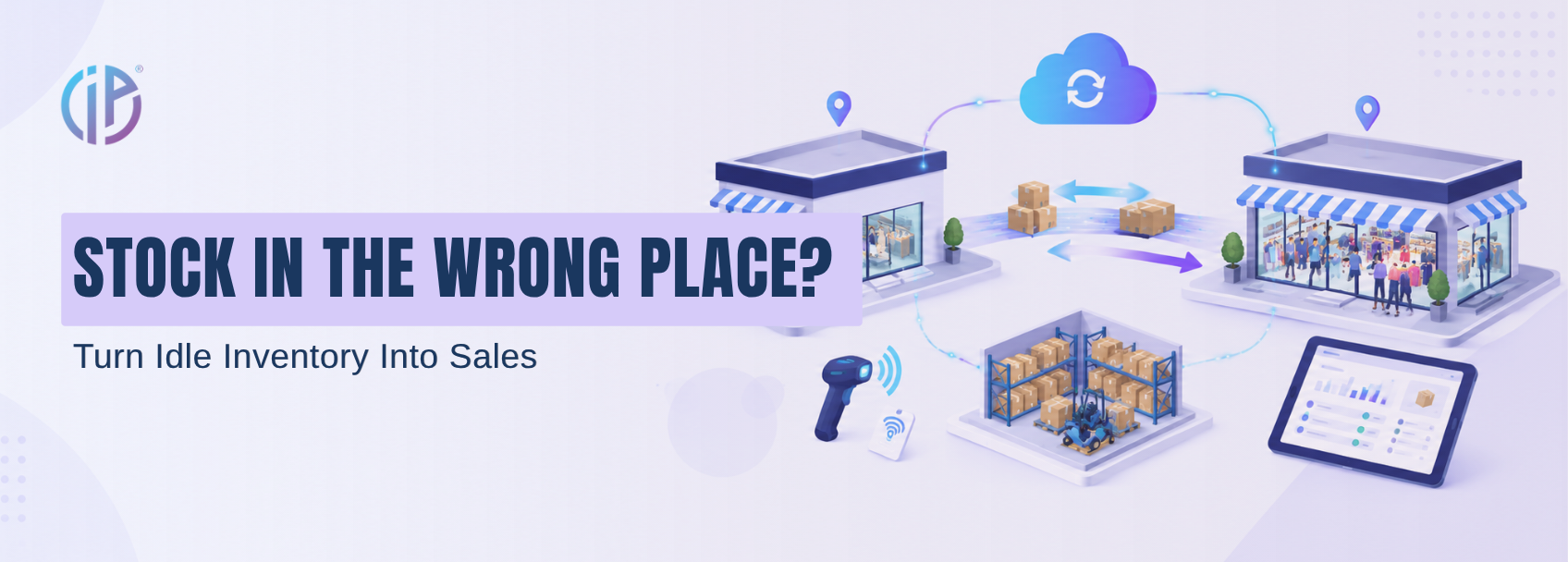
Stock in the Wrong Place? Turn Idle Inventory Into Sales

Imagine this scenario unfolding across your retail network today: A customer walks into your flagship mall outlet looking for a popular item from your latest collection. The store assistant checks the backroom, comes out empty-handed, and admits it is completely sold out. Disappointed, the customer walks next door and spends their money with a competitor.


Meanwhile, at another branch in your chain just 15 kilometers away,
2,000 units of that exact same item have been sitting untouched in the stockroom for over three weeks.


Multiply this single incident across 20, 50, or 100+ store locations, and the financial damage becomes massive. This is one of the most dangerous hidden revenue killers in enterprise retail: suffering from stockouts in high-traffic branches while holding excess inventory in quiet branches.


When a retail business expands into a major multi-outlet enterprise, total inventory reports across the group might look healthy on paper. On the ground, however, inventory velocity is rarely equal across all locations.


Mastering
inter-branch stock transfers (stock rebalancing) allows large retail operations to fulfill customer demand, unlock trapped working capital, and boost profit margins without spending millions on fresh supplier orders.

Inter-Branch Stock Rebalancing Flow

SURPLUS OUTLET

Satellite Store / Hub

2,000 IDLE UNITS

Low Sales Velocity
Capital Trapped

DIGITAL TRANSFER ORDER
Automated Rebalancing SOP

Barcode Scan & Real-Time ERP Sync

HIGH-DEMAND OUTLET

Flagship Mall Branch

IMMINENT STOCKOUT

High Foot Traffic
Surging Demand

RECOVERED RETAIL REVENUE
Fulfills demand in high-traffic outlets without new supplier cash outlay

Quick Summary: What Is Inter-Branch Stock Rebalancing?

Inter-Branch Stock Rebalancing is the strategic process of shifting existing physical stock from outlets with surplus inventory or low sales velocity to high-performing outlets experiencing rapid stock depletion. Instead of issuing new purchase orders to suppliers, retail chains redistribute owned stock across their store network.

Executing a systematic rebalancing strategy delivers four key commercial advantages:


  • Stops Lost Revenue: Keeps high-margin items on shelves at your top-performing retail locations.
  • Eliminates Dead Stock: Clears slow-moving inventory from low-volume branches before it becomes obsolete.
  • Preserves Working Capital: Reduces unnecessary purchase orders, keeping cash reserves free for business expansion.
  • Protects Gross Margins: Sells items at full retail price in high-demand stores rather than dumping them through heavy end-of-season markdowns.

Why Moving Existing Stock Beats Buying New Inventory

When a branch manager reports that a fast-moving item is running low, their immediate reaction is usually to request a fresh purchase order from suppliers. While this solves the short-term supply gap for that single outlet, it exposes the business to serious capital inefficiencies.


1. Keeps Capital Working Harder
Placing new supplier orders requires immediate cash outlay. If your retail group already holds 100,000 units of a product line spread across 50 branches, buying another 30,000 units ties up hundreds of thousands of ringgit in working capital that could be better spent on expansion, marketing, or technology.


2. Reduces Warehouse Overhead and Holding Costs
Every square foot of stockroom space carries an operational cost. Holding thousands of idle items across regional outlets increases handling labor, clutters stockrooms, and heightens the risk of product damage or shrinkage.


3. Prevents Margin Erosion From Emergency Clearances
When slow-moving items sit in quieter outlets past their peak sales window, store teams eventually have to run deep 50% to 70% clearance markdowns just to make space for new arrivals. Rebalancing that stock to high-traffic outlets early in the season lets you capture full retail value.


Adopting a clear
centralized vs. decentralized purchasing strategy ensures headquarters maintains complete command over whether stock reallocation is driven automatically by demand forecasting software or requested directly by store supervisors


A 5-Step Stock Transfer SOP for Enterprise Chains

Moving high volumes of stock between 50+ store locations can quickly create inventory chaos without strict digital workflows. Here is a proven 5-step Standard Operating Procedure (SOP) designed for large-scale retail operations.

5-Step Inter-Branch Stock Transfer SOP

STEP 1
Min-Max Rules
Set safety stock & max thresholds per branch
STEP 2
Spot High vs. Low Outlets
Analyze sales velocity & locate surplus stock
Trigger Stock Rebalancing
STEP 5
Scan & Reconcile
Audit arrival & update live inventory
STEP 4
Pack & Ship
Scan RFID / Barcodes & update status
STEP 3
Digital Order
Issue formal transfer request in ERP

Step 1: Set Automated Minimum and Maximum (Min-Max) Stock Rules


Every branch outlet must operate on automated inventory thresholds per category:

  • Minimum Level: The safety stock threshold that triggers an automated replenishment or transfer alert before a stockout occurs.
  • Maximum Level: The upper capacity limit an outlet can hold without causing backroom congestion or slow stock turnover.


When Outlet A exceeds its maximum threshold while Outlet B drops below its safety stock, the system flags an immediate stock rebalancing opportunity.


Step 2: Compare Sales Velocity Across All Branches


Instead of relying on manual stock counts or delayed weekly branch reports, operations directors should analyze real-time sales velocity across every store location. Comparing sell-through rates across outlets instantly reveals where stock is sitting idle and where demand is surging.


Step 3: Issue a Digital Transfer Order Before Moving Physical Goods


Never permit store staff to dispatch goods based on verbal agreements or informal messaging groups. Every transfer must start with a formal digital transfer order detailing:

  • Source branch and receiving branch
  • Barcode / SKU identifiers
  • Exact quantities requested and transfer justification


By leveraging enterprise
multi-outlet POS system features, store cashiers and supervisors can generate digital transfer requests directly from the checkout counter, instantly updating stock status across the company network.


Key Advantage for Modern Omnichannel Retail:


With an integrated omnichannel ERP, retailers can view real-time stock status across physical retail shops and online e-commerce channels simultaneously. This gives operations teams total visibility to reallocate stock seamlessly whether fulfilling a high-volume mall outlet or an online flash sale.


Step 4: Dispatch Using RFID or Mobile Inventory Control Apps


Before handing shipment cartons over to logistics teams or internal drivers, sending store supervisors must perform an automated barcode or RFID scan using an inventory control mobile app against the digital transfer note. Once verified and dispatched, the system automatically updates the inventory status to "In Transit."


Step 5: Receive, Audit, and Confirm at Destination Branch


Upon arrival at the receiving outlet, store staff use inventory control mobile apps or handheld RFID scanners to audit every incoming carton line-by-line before accepting the stock into active store inventory. If items are missing or damaged in transit, staff raise an instant discrepancy ticket to keep financial and stock records accurate.

3 Expensive Pitfalls That Cause Phantom Stock Discrepancies

Stock transfers keep your business agile, but poor execution across dozens of stores creates inventory leaks. Watch out for these three major operational pitfalls:


1. Unrecorded Physical Movements
When branch supervisors move stock informally without digital logging, system counts diverge from physical stock. The sending store appears to have stock it no longer possesses, while the receiving store holds unrecorded items, resulting in "phantom stock" that corrupts reporting.


2. Unreported Transit Shrinkage and Damage
In high-volume operations, goods can get lost or damaged during multi-branch transport. If 500 cartons or 2,000 items are dispatched between branches but only 1,950 items arrive in sellable condition, staff must record the 50 missing/damaged units immediately. Ignoring transit loss inflates balance sheet asset values.

3. Inconsistent Barcode and SKU Master Data
If different branch locations utilize mismatched SKU master codes or localized item descriptions, transferred goods will be misidentified upon arrival. Operating your chain on a unified
centralized cloud ERP platform ensures that every store, distribution hub, and online store shares identical SKU master data in real time.


Key Performance Indicators (KPIs) to Track Transfer ROI

To ensure your rebalancing program delivers maximum financial returns, monitor these three operational metrics:


  1. Transfer Speed (Lead Time): The total time elapsed from transfer request creation to store shelf placement. Faster transfer execution directly translates to recovered sales.
  2. Transfer Accuracy Rate (%): The percentage of stock transfers received with zero discrepancies. Enterprise operations should maintain a target of 99% or higher.
  3. Post-Transfer Sell-Through Rate: How rapidly transferred stock turns into completed sales at the receiving branch. This validates whether inventory is being directed to true demand hotspots.

Conclusion: Turn Idle Stock Into Active Revenue

Scaling a major retail chain across 20, 50, or 100+ locations does not mean you have to keep buying more stock to cover localized shortages. In most cases, the inventory required to reach your monthly revenue goals is already sitting inside your business—it is simply parked in the wrong store location.


By enforcing standard Minimum-Maximum rules, requiring digital transfer SOPs, and utilizing real-time multi-branch visibility, retail executives can keep store shelves full, customers loyal, and working capital fluid.


Ready to Eliminate Localized Stockouts Across Your Store Network?


Managing multi-store stock transfers manually using static spreadsheets and chat groups inevitably leads to lost items, inaccurate records, and frustrated store managers.


iDCP Systems equips enterprise retail chains across Southeast Asia with unified Cloud ERP and Multi-Outlet Retail POS software. Gain real-time stock visibility across physical stores and online channels, automate inter-branch transfer workflows, and optimize inventory turnover from a central dashboard.


👉
Book a Free iDCP Demo Today to discover how iDCP Systems can streamline your multi-store retail operations.


Frequently Asked Questions (FAQs)

  • What is the main difference between a purchase order and an inter-branch transfer?

    A purchase order is an external request to buy new inventory from suppliers, requiring new cash outflow. An inter-branch transfer is an internal reallocation of stock you already own from one store outlet to another, requiring no additional supplier expenditure.

  • How often should a multi-outlet retail chain rebalance stock?

    For fast-fashion, footwear, and consumer electronics chains with 20+ outlets, stock rebalancing reviews are typically conducted on a weekly or bi-weekly cycle. For general retail operations, monthly or event-driven rebalancing (ahead of major sales campaigns) is standard practice.

  • Who should hold approval authority for store stock transfers?

    In enterprise multi-outlet retail operations, store managers can initiate transfer requests, but final approval should rest with regional operations managers or centralized inventory planners who possess full cross-branch stock visibility.

  • How should store teams handle damaged stock upon delivery?

    Receiving staff should take photos, accept only undamaged units into active sellable inventory, and log a "transit damage" ticket in the system. This ensures delivery logs accurately reflect real sellable inventory.

  • Can an enterprise POS system automate inter-branch stock transfers?

    Yes. Modern multi-outlet POS platforms allow store supervisors to initiate, track, and receive stock transfers directly from checkout terminals or mobile handheld devices, updating inventory counts across all channels in real time.

iDCP Systems

iDCP Systems


iDCP Systems offers a full suite of cloud solutions tailored for distribution and retail businesses. Our offerings- from our core ERP platform to our advanced POS system, powerful mobile app, and specialized solution add-ons- help companies digitalize operations and manage multi-channel sales to scale with confidence.

Read Next Blogs


centralized vs decentralized purchasing for chain stores
By Marketing September 8, 2026
Compare centralized and decentralized purchasing for retail chains. Discover how SEA multi-outlet businesses use hybrid purchasing to scale and prevent stockouts.
iDCP Wins Two Silver at the 2026 Internet Alliance Tech Industry Awards
By Marketing April 7, 2026
iDCP wins Silver for Cloud Solutions & Emerging Tech at the 2026 IA Tech Awards. Discover how our award-winning Cloud ERP is transforming retail in Malaysia.
Inventory Leakage: How to Catch and Fix Inventory Mistakes
By Digital Marketing February 12, 2026
Struggling with inventory errors and stock-outs? Discover how iDCP inventory management helps distributors and retailers protect profits and grow efficiently.

Scale your Business with iDCP

Don’t let challenges stop your growth — together, we’ll deliver better results.

Contact Us