November 25, 2025

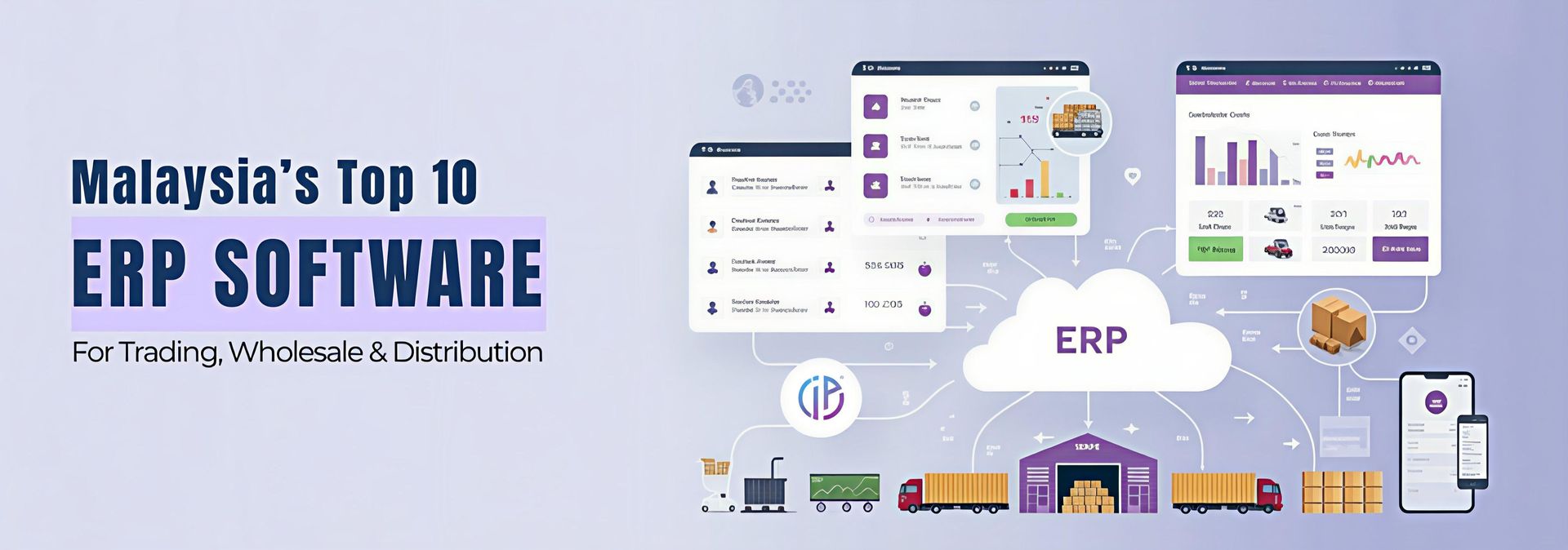
Top 10 ERP Trading, Wholesale & Distribution Software Solutions in Malaysia 2026

We are entering 2026, and ERP is no longer just a back-office tool, it has become the driving force that enables Malaysian businesses to scale and stay competitive. From small wholesalers to large distributors, companies are moving away from outdated systems toward cloud ERP platforms that provide real-time insights, seamless integration, and the flexibility to grow with evolving business needs.


This blog explores why Malaysian companies need modern ERP and the top 10 trading, wholesale & distribution ERP software solutions in Malaysia.

Why Malaysian Companies Need Modern ERP

With the Malaysian government offering SME digital grants and incentives, and with rising adoption of mobile technologies, iOT and AI, businesses are now prioritizing ERP systems that do more than track orders.


Businesses relying on outdated systems or manual processes face inefficiencies, errors, and missed opportunities. A modern ERP system delivers:


  • Centralized Operations: Unified data across departments reduces duplication and miscommunication.


  • Enhanced Order Efficiency: Automation of repetitive tasks allows staff to focus on strategic work.


  • Real-Time Insights: Managers can track performance, sales, inventory, and finance instantly.


  • Scalability: Cloud ERP platforms grow with your business without compromising performance.

Top 10 ERP Software Solutions in Malaysia

Here is a curated list of leading ERP systems in Malaysia and the business needs they serve:


1. Microsoft Dynamics 365


A cloud-based ERP and CRM integrating finance, operations, and customer engagement. Offers workflow automation, and multi-entity management, and connects seamlessly with Office 365, Teams, and Power BI.

Best For: Large enterprises needing robust analytics.


2. Oracle NetSuite


A cloud-native ERP unifying financials, inventory, procurement, and e-commerce. Provides real-time visibility, multi-location support, and automated workflows for growing businesses.
 

Best For: Exporters, distributors, and multi-entity companies.


3. SAP S/4HANA


High-performance ERP offering in-memory processing and advanced analytics. Supports manufacturing, utilities, and process industries for end-to-end management.


Best For: Large corporations needing comprehensive process control.


4. Infor ERP


Tailored for manufacturing and distribution, it provides real-time inventory, workflow automation, and multi-site visibility. Modular and cloud-ready.


Best For: Manufacturers and distributors seeking industry-focused ERP.


5. Epicor ERP


Designed for mid-sized manufacturers and distributors, integrating production, inventory, and finance. Offers real-time dashboards, workflow automation, and mobile access.


Best For: Manufacturers needing scalable, production-focused ERP.


6. Odoo ERP


A modular, flexible ERP ideal for SMEs and startups. Supports inventory, CRM, accounting and HR.


Best For: Growing businesses seeking a cost-effective, adaptable solution.


7. HashMicro ERP


Regional ERP with localized features, SST compliance, and bilingual support. Integrates finance, inventory, and sales with real-time visibility and multi-channel support.


Best For: SMEs needing fast deployment and operational efficiency.


8. SYSPRO ERP


ERP for mid-sized manufacturers and distributors, offering inventory, production, and finance integration. Supports multi-location operations with real-time insights and mobile access.


Best For: Companies prioritizing operational stability and efficiency.


9. iDCP ERP


Malaysia’s modern ERP for trading, wholesale, and distribution, built with mobile operational control, workflow automation, and real-time visibility. An all-in-one platform for managing purchases, supply chain, warehouse, inventory, finance, CRM, and sales. Designed for multi-entity, cross-border, and multi-warehouse operations, the iDCP ERP system also supports seamless multi-channel sales, a capability many ERPs still lack.


Best For: Malaysian trading and wholesale distributors seeking a scalable and customizable ERP.


10. Sage X3


ERP solution for mid-sized companies, integrating finance, inventory, and sales. Offers multi-currency support, reporting dashboards, and workflow automation, with optional cloud deployment.


Best For: Trading and finance-focused firms needing centralized control.
What to Consider Before Choosing an ERP for Your Business

Selecting the right ERP system is critical for maximizing efficiency, reducing costs, and supporting growth. Here are the key considerations Malaysian businesses should evaluate:


1. Business Needs and Industry Fit


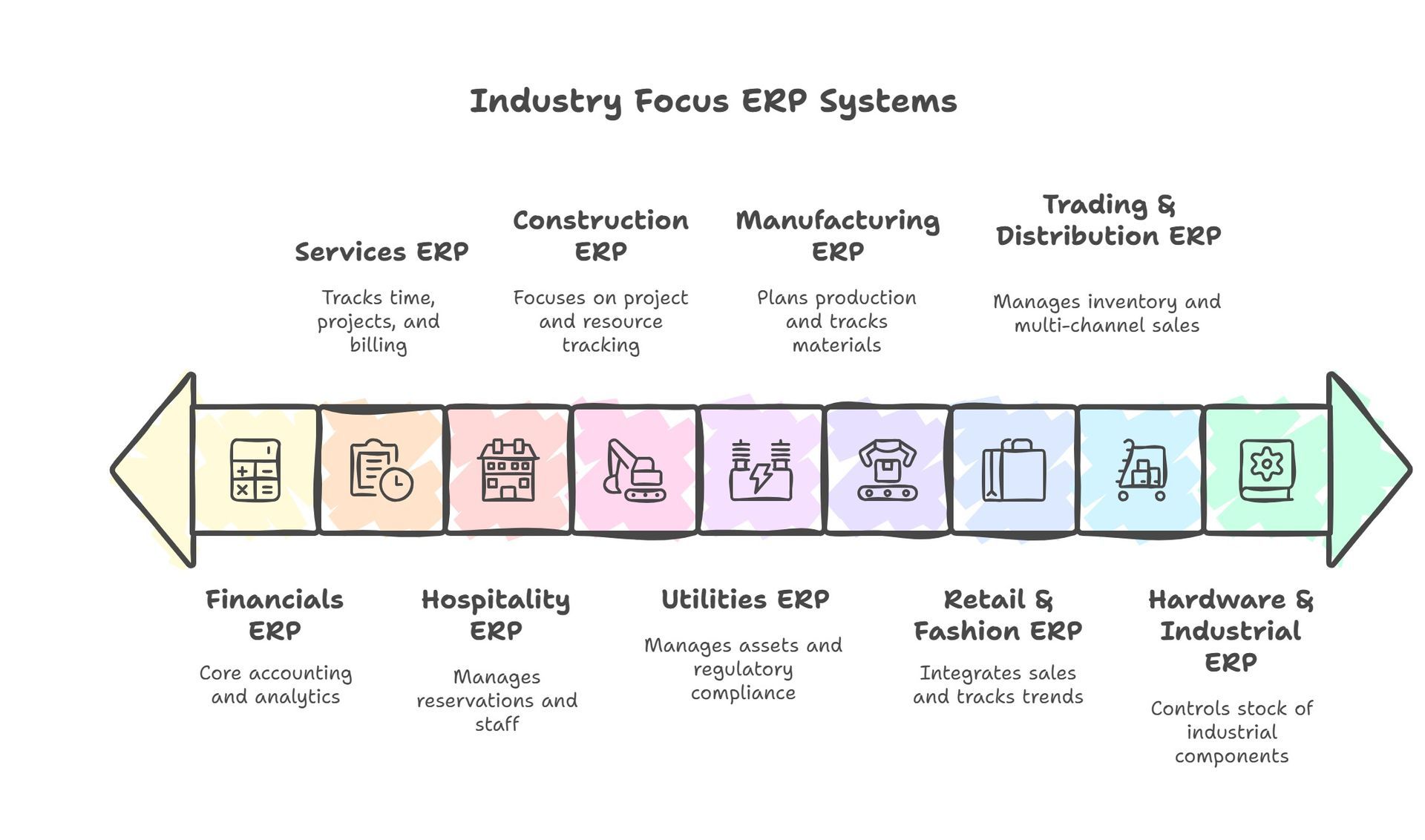
  • Identify which operations you want to improve: sales, logistic, procurement, inventory, finance, warehouse, or multi-channel distribution. Choose an ERP tailored for your industry to get specialized features and workflows. Example of industry specific ERP as below:


  • Trading & Distribution ERP: Warehouse inventory, orders, supply chain and logistic management.
  • Manufacturing ERP: Production planning, engineer-to-order workflows, and raw material tracking.
  • Healthcare & Skincare Distribution ERP: Lot tracking, expiry management, and regulatory compliance.
  • Hardware & Industrial ERP: Stock control for industrial components and complex procurement processes.
  • Utilities ERP: Asset management, regulatory compliance, and maintenance scheduling.
  • Chemicals ERP: Batch tracking, safety compliance, and formula costing.
  • Construction ERP: Project management, budgeting, subcontractor management, and resource allocation.
  • Hospitality ERP: Reservations, inventory management, staff scheduling, and financial integration.
  • Services ERP: Time tracking, project tracking, client billing, and performance monitoring.
  • Financials ERP: Multi-entity accounting, financial consolidation, cash flow management, and analytics.
  • Retail & Fashion ERP: Omnichannel sales, POS integration, trend tracking, and CRM.


2. Scalability and Growth Potential


  • Ensure the ERP can grow with your business, whether expanding outlets, warehouses, or cross-border operations.
  • Look for cloud-based, modular systems that allow you to add features without heavy hardware investments.


3. Multi-Channel Support


  • If your business operates B2B, B2C, DTC, or across multiple regions, your ERP should support multi-channel sales, multi-entity operations, and multi-location management, including multi-pricing and multi-commission setups.


4. Integration and Compatibility


  • Check that the ERP can integrate with existing systems (warehouse, procurement, supply chain, sales channels, CRM, accounting tools) to prevent data silos.
  • Integration with local regulatory systems like LHDN MyInvois for e-invoicing is also essential for compliance.


5. Ease of Use and Mobile Accessibility


  • Modern ERP systems should have intuitive dashboards, mobile apps, and workflow approvals to enable decision-making on the go.
  • Ensure your team can adapt quickly without extensive training.


6. Cost, Pricing, and ROI


  • Evaluate subscription vs on-premise pricing, total cost of ownership, and projected ROI.
  • Factor in implementation, training, maintenance, and long-term scalability.


7. Vendor Support and Reputation


  • A reliable ERP vendor provides implementation guidance, ongoing support, and updates.
  • Look for providers with local experience in Malaysia and across your industry.


8. Future-Readiness and Technology


  • Choose ERP systems that support cloud mobility, AI analytics, IoT integration to stay competitive.,
  • Consider how easily the system can adapt to emerging business models and digital trends.


By carefully evaluating these factors, businesses can choose an ERP system that not only fits current needs but also supports long-term growth and efficiency.

How iDCP ERP Helped RCB Malaysia Scale and Manage Multi-Country Operations

1. Unified Operations Across 7 Countries


iDCP ERP enabled RCB Malaysia to manage its motorcycle parts and accessories business across 7 countries in a single system, connecting multiple warehouses, sales channels, and finance operations. This eliminated fragmented systems and simplified global oversight.


2. Month-End Accounting Close Completed in 1 Day


With integrated finance modules and automated workflows for all the entities, RCB Malaysia now completes its financial close in just one day, according to the Finance Team’s quarterly review meeting. This reduces delays and ensures accurate reporting across all entities.


3. 98%+ Inventory Accuracy Across 1.3 Million SKUs


iDCP ERP’s advanced warehouse and inventory controls helped RCB manage 1.3 million SKUs and achieve over 98% inventory accuracy, as noted by the Warehouse Director during the quarterly stock-take review. This minimizes stock discrepancies and optimizes order fulfillment across all locations.


4. Real-Time Dashboards for Faster Decisions


The ERP provides real-time visibility into stock levels, sales trends, and operational KPIs, empowering management to make faster, data-driven decisions across multiple countries.


5. Seamless Multi-Channel Sales and Workflow Control


iDCP ERP integrates B2B, B2C, and B2B2C sales channels, mobile approvals, and omnichannel operations, enabling RCB to scale efficiently, reduce manual work, and respond quickly to changing market demands.

Frequently Asked Questions: iDCP ERP for Trading, Wholesale & Distribution

  • What does ERP stand for?

    ERP stands for Enterprise Resource Planning, a software system that helps businesses manage and integrate their core operations.

  • What is a Trading & Distribution ERP?

    A Trading & Distribution ERP is an integrated software system designed to manage the end-to-end operations of wholesalers, distributors, and trading companies. It connects key functions such as purchasing, inventory, warehouse operations, sales orders, logistics, finance, and customer management into one platform. With real-time data and automated workflows, businesses can reduce manual work, prevent stock issues, and improve overall operational efficiency.

  • How does an ERP improve warehouse operations?

    An ERP improves warehouse operations by centralizing inventory data and automating daily tasks. It provides real-time stock visibility across multiple locations, supports barcode and mobile scanning, speeds up receiving and picking, and reduces human errors. ERP systems also optimize replenishment, manage warehouse locations, track batches or lots, and streamline stock transfers. This helps warehouses operate faster, more accurately, and at lower cost.

  • What is iDCP ERP and who is it for?

    iDCP ERP is a cloud-based ERP solution designed for trading, wholesale, and distribution businesses in Malaysia. It integrates purchases, supply chain, inventory, warehouse, finance, and sales operations into a single platform, with support for multi-channel sales (B2B, B2C, B2B2C) and multi-entity, multi-warehouse operations, including cross-border control.

  • How does iDCP ERP help trading and distribution companies?

    iDCP ERP helps trading and distribution companies with real-time inventory and warehouse control, including batch/lot tracking, barcode scanning, and automated reorder points. It streamlines order management for sales orders, purchase orders, backorders, and returns. The system enhances supply chain efficiency with procurement automation, logistics planning, and demand forecasting. Integrated financials handle AP, AR, GL, and reporting, while CRM manages customer data, sales leads, including multi-pricing and multi-commission setups. Built-in dashboards and workflow automation improve accuracy, speed, and decision-making.

  • Can iDCP ERP handle B2C sales for distributors?

    Yes. Unlike many traditional ERP systems that focus only on B2B, iDCP ERP supports B2C, B2B, and B2B2C sales such as consignment sales, retail point-of-sales, online channel sales, enabling distributors and wholesalers to sell directly to consumers while managing inventory and orders in one system.

  • Does iDCP ERP support mobile and workflow approvals?

    Absolutely. IDCP ERP comes with a mobile app for operations management and workflow approval features, allowing managers to approve orders, track inventory, and monitor sales anytime, anywhere, improving responsiveness and operational control.

  • How does iDCP ERP improve operational efficiency?

    By integrating all business functions into a single platform, iDCP ERP eliminates data silos, automates repetitive tasks, and provides real-time CEO and CFO dashboards. This reduces errors, accelerates decision-making, and increases overall productivity for trading and distribution companies.

  • Is iDCP ERP scalable for growing businesses?

    Yes. Built on cloud architecture, iDCP ERP is highly scalable, supporting multi-entity, multi-warehouse, and cross-border operations. As your business expands, the system grows with you without requiring major IT investments.

  • What makes IDCP ERP different from other ERP systems?

    iDCP ERP is built from the ground up for trading, distribution, retail, and multi-channel businesses, with cloud-based architecture and workflows tailored to real operational needs. Unlike generic ERPs, it offers true multi-entity, cross-border, and multi-warehouse control, integrated inventory, sales, finance, and CRM, plus seamless support for multi-channel sales. Its mobile operational control, real-time visibility, and automation features empower businesses to optimize processes, reduce errors, and make data-driven decisions faster.

  • How does iDCP ERP support compliance in Malaysia?

    iDCP ERP includes built-in SST and e-invoicing support, ensuring compliance with local regulations. It also provides audit trails and reporting features, making it easier for trading and distribution companies to meet regulatory requirements.

  • Which trading companies can use iDCP ERP?

    iDCP ERP is widely adopted by trading and distribution businesses across Malaysia, including motor parts and accessories distributors, industrial hardware distributors, valves and pipes distributors, skincare and healthcare distributors, fashion apparel and footwear companies. These businesses rely on iDCP ERP to manage inventory, multi-channel sales, finance, and warehouse operations efficiently.

Conclusion


In 2026, adopting a modern ERP system is no longer optional for Malaysian businesses, it’s essential to scale efficiently, stay competitive, and harness real-time insights. Whether you’re a distributor or manufacturer, selecting the right ERP platform can transform operations, improve decision-making, and drive growth in Malaysia’s rapidly evolving digital economy.


Among the best ERP system software companies in Malaysia, iDCP Systems stands out for its strong multi-entity and multi-warehouse inventory and sales modules that empowers Malaysian wholesalers and distributors to grow with confidence.


💡 IDCP Systems — We Build Business Confidence.


🌐 Learn more at www.idcp.my or call iDCP +6012-9379260 to request a system demo.

iDCP Systems

iDCP Systems


iDCP Systems offers a full suite of cloud solutions tailored for distribution and retail businesses. Our offerings- from our core ERP platform to our advanced POS system, powerful mobile app, and specialized solution add-ons- help companies digitalize operations and manage multi-channel sales to scale with confidence.

Read Next Blogs


10 best retail pos systems in Malaysia with real-time sales data
By Digital Marketing November 11, 2025
Discover the 10 best retail POS systems in Malaysia for 2025. Compare features, pricing, and why iDCP Retail POS is ideal for fashion and fast-growing multi-outlet stores.
6 Best Inventory ERP Software Systems in Malaysia (2025 Review for SMEs & Distributors) - iDCP ERP
By Digital Marketing October 29, 2025
Explore the top inventory ERP system Malaysia options for 2025- cloud‑native, e‑invoicing ready, built for Malaysian SMEs, distributors & retailers.
A cashier asks a customer if they need an e-invoice at a retail store at IDCP Retail Shop
By Digital Marketing October 3, 2025
Learn about retail and customer e-Invoicing in Malaysia 2025 with 50 FAQs. Covers retail payments, compliance rules, exemptions, and key questions.

Scale your Business with iDCP

Don’t let challenges stop your growth — together, we’ll deliver better results.

Contact Us